Polished, Brushed or Hammered: Choosing a Silver Finish
Compare polished, brushed and hammered silver finishes by their light, fingerprints and texture, then choose a look suited to your object and its setting.
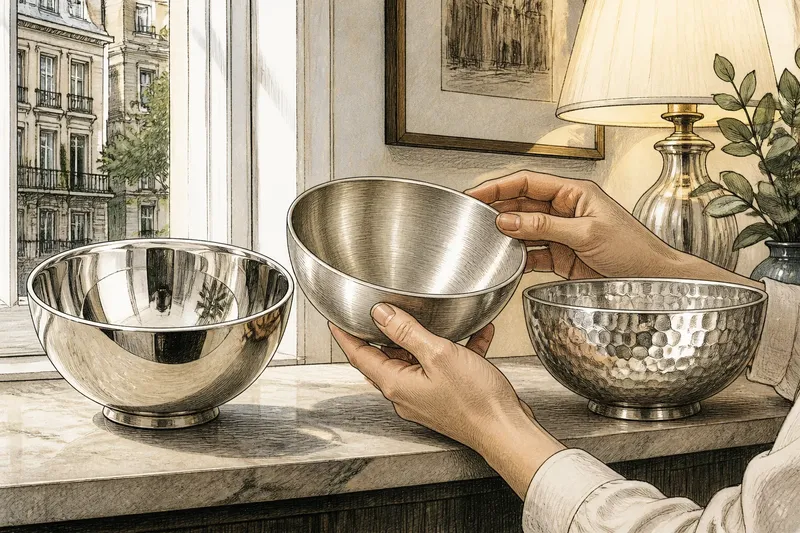
A polished silver tray throws a window back at you; a brushed one softens the same light into a quiet sheen. Those differences make silver finishes more than a matter of taste: each changes how an object catches light, shows handling and sits in a room. A useful way to choose is to watch the finish over an ordinary day, from the first bright window to evening lamplight.
Begin with the light the object will meet
Before comparing samples, identify where the object will live and what light reaches it. A picture frame on a bright wall, a spoon held close to the eye and a large pendant beneath a ceiling lamp all present their surface differently. A finish that looks subtle in a workshop can become lively beside a window.
Set a silver-finish sample, or an object with a similar surface, beside the intended location. Look at it in daylight, then again under the room’s usual lamps. Move a little to either side: polished metal may reflect the room as shifting shapes, while brushed or hammered surfaces break those reflections into smaller, less distinct marks.
Notice the background as well. A polished surface can pick up dark furniture, coloured walls and passing movement. Brushing gives reflected shapes a softer edge; hammering scatters them across small facets. The metal has not changed colour, but its surface makes the surroundings feel more or less present.
Choose the finish in the light where the object will actually be seen.
Polished silver makes reflections part of the design
Polished silver has a smooth, bright surface that reflects clear shapes. On a small object, that can lend a crisp, formal character: the curve of a candlestick or the rim of a bowl becomes a bright line. On a larger surface, reflections can become the main visual event, echoing nearby windows, lamps and movement.
That clarity also makes fingerprints and smudges easier to notice, particularly on broad areas touched often. Polished silver suits objects whose reflective character is welcome and whose surface can be wiped with suitable care. A display piece, a serving tray used occasionally or a small decorative fitting may benefit from its sharp gleam.
For a frequently handled object, consider where fingers land. A polished handle may show contact sooner than a brushed one, while a polished rim can be easier to inspect at a glance. The choice is not simply between “easy” and “difficult” upkeep; it is whether visible traces suit the object’s use and whether you are content to tend them.
Brushed silver softens glare and disguises handling
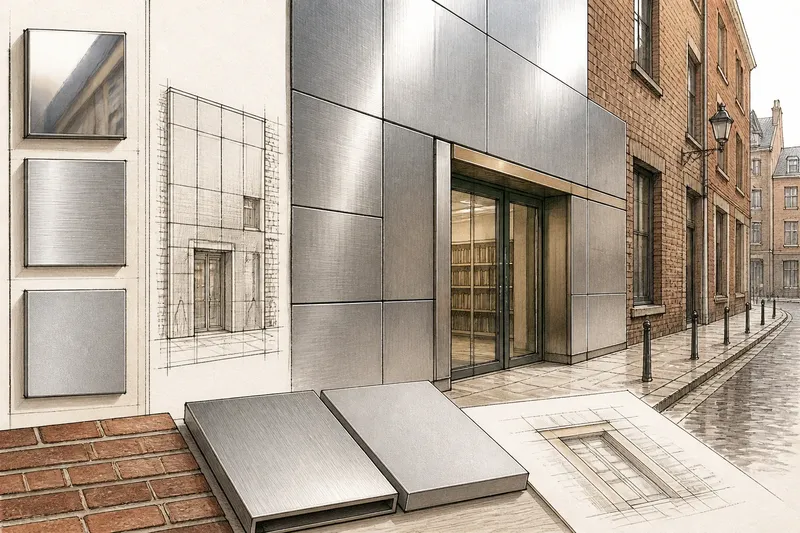
A brushed finish carries fine, directional lines across the surface. These marks scatter light rather than returning a neat reflection, so the result tends to read as satin-like and restrained. The direction of the grain matters: strokes along a handle emphasise its length, while strokes across a panel give it a different visual rhythm.
Because the surface already has a fine texture, light fingerprints can be less conspicuous than on a mirror-smooth finish. They do not disappear, and greasy marks may still show, especially across a broad panel. The brushed grain can also make careless wiping noticeable if cloth marks run against its direction.
Brushed silver often suits handles, cabinet pulls, frames and fittings that are touched or viewed at close range. It brings a quieter surface without making the metal look dull. If the object needs a calm presence beside patterned stone or busy furnishings, brushing can keep its shape legible without adding another strong reflection.
Follow the visible grain when cleaning a brushed surface, using care suited to the object.
Hammered silver turns texture into moving light
Hammered silver is marked with small depressions and raised facets. These irregular surfaces scatter light in many directions, giving a bowl, pendant or panel a lively, dappled appearance. Unlike the fine, consistent lines of brushing, hammer marks are usually more varied and read as visible texture in their own right.
The facets interrupt fingerprints and broad reflections, but they do not make handling marks impossible to see. Their uneven surface can collect dust or residue in recesses, so an object’s shape and use matter. A sculptural vessel that sits on a shelf asks something different from a hammered cup that is washed and handled often.
Hammering is a strong choice when the surface itself should attract attention. It can add movement to a simple silhouette, but may compete with intricate carving, busy decoration or a room already full of small patterns. View the object from the distance at which it will usually be noticed: up close, the marks feel tactile; from farther away, they merge into a shimmering field.
How do silver finishes behave in daily use?
Which silver finish shows fingerprints most clearly?
Polished silver usually makes fingerprints and smudges easiest to spot because its clear reflections reveal interruptions on the surface. Brushed and hammered textures can break up those marks visually, though neither prevents them.
Does brushed silver always look duller than polished silver?
Brushed silver usually reflects light less sharply, but it can still appear bright under direct illumination. Its fine grain changes the character of the reflection rather than removing the metal’s sheen.
Is hammered silver practical for an object used every day?
It can be, if its texture suits the object and the care it receives. Think about whether its recesses are easy to clean and whether its lively surface works with frequent handling.
Can a single object combine different silver finishes?
Yes. A polished rim against a brushed body, for example, can clarify the object’s outline while keeping the main surface quieter. The contrast works best when each finish has a clear visual purpose rather than competing for attention.
Use an ordinary day to make the comparison
Imagine you are choosing a silver-coloured bowl for a console beside a window. In the morning, you notice that the polished sample reflects the bright window as a strong shape; the brushed sample catches a softer glow; the hammered sample breaks the light into scattered highlights. At midday, you touch each sample with clean fingers and look again from the doorway. The polished surface now shows the clearest smudge, while the textured options keep their overall pattern. In the evening, under a table lamp, the hammered bowl becomes the most animated. If you want a quiet accent, you might choose brushed; if you want a changing display of light, hammered; if a crisp reflection is the point, polished.
This is a comparison, not a cleaning test: avoid deliberately marking a valuable object. A finish sample or a less precious item gives you a safer sense of how the surfaces read in the intended setting.
Match the finish to the object’s role
Start with three questions: should the object reflect its surroundings, should its surface texture be visible, and how often will people touch it? Polished silver answers the first most strongly. Brushed silver offers a softer sheen and a directional grain. Hammered silver makes texture the centre of attention.
Then consider the object’s scale and silhouette. A broad, plain surface can carry pronounced hammer marks without losing its shape; a small object with elaborate details may benefit from a gentler brushed finish. A polished edge can also act as a deliberate accent rather than covering the whole piece.
For a final decision, compare samples in the actual setting and from the usual viewing distance. Check the maker’s care instructions before choosing a cleaning method, since the object’s construction and finish can affect what is suitable.
The best silver finish is the one whose changing light, visible texture and signs of use belong with the object’s purpose. Look at it at the hour you expect to use it, not only under the bright light of a shop, and the choice becomes much clearer.