A City Walk for Finding Silver in the Built Details
A city walk for finding silver in the built details helps you spot rails, signs and fittings, compare their uses and record what you see without guessing.
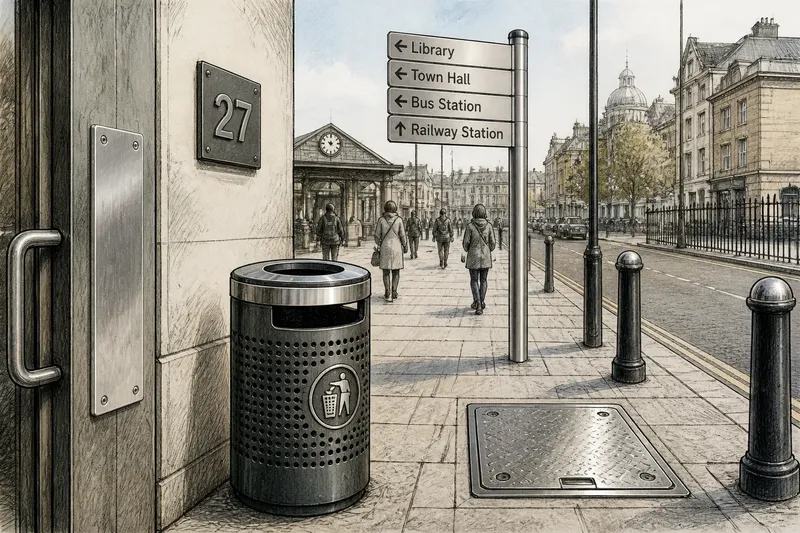
A city walk for finding silver in the built details can begin with a bus-stop sign, a metal litter bin or a row of door numbers. These everyday objects show how silver-toned finishes help cities label, organise and maintain shared spaces. Look for what each object does before considering how it appears: a sign directs, a bin collects, and a number identifies an entrance.
Choose a short route along a high street, through a station forecourt or around a civic square. The aim is to notice the jobs assigned to silver-coloured objects, not to hunt for rare metal or inspect architectural facades. Stay in public areas, keep entrances and pavements clear, and observe from a comfortable distance.
Follow the jobs silver-toned objects perform
Urban fittings often use a silvery appearance to signal a practical role. A street sign needs to be legible; a bollard marks a boundary; a drain cover belongs to the pavement rather than the building beside it. Their shape, placement and lettering help explain their purpose more reliably than colour alone.
- Direction: street-name plates, station signs and wayfinding panels identify routes or destinations.
- Access: door handles, push plates and lift buttons mark the points people use to enter or move through a place.
- Boundary: bollards, railings and queue barriers organise movement or separate areas.
- Service: utility covers, taps and public-bin fittings support everyday maintenance and use.
- Identification: house numbers, plaques and labels distinguish one address, service or object from another.
For each object, ask what a passer-by is meant to do with it. If that purpose is not clear, record its visible location and form rather than guessing.
Read materials through their public use
Silver-toned does not necessarily mean silver. A fitting may be made from stainless steel, aluminium, plated metal or another material, and a visual inspection from the pavement cannot settle the question. Where an official label or public building description names the material, you can note that source; otherwise, describe the visible finish without assigning a composition.
Compare how objects are designed for contact. A door push plate presents a broad, reachable surface; a button is small and clearly separated; a utility cover sits level with the ground. These forms reveal how people are expected to interact with a fitting, while wear, dirt or a polished appearance alone cannot identify its material or history.
Say you pass a library entrance with a silver-coloured push plate, a dark door handle and a small room-number plaque. The starting observations are their positions and shapes: one broad plate at hand height, one graspable handle and one legible label. You note that the plate invites a push, the handle a pull or grasp, and the plaque identifies the room; the material remains unknown unless the library provides reliable information.
Compare objects without turning the walk into an inspection
A simple record keeps observations useful. For each stop, note the object, its job, its location and any text that can be read from a public path. Do not touch fittings, peer into restricted areas or photograph people without a clear reason and appropriate care.
- Check whether a sign names a street or destination; if its wording is legible, record the label, then move on, and if not, note its position without inventing a message.
- Check whether a bollard marks an edge or channel; if its placement makes that role apparent, record the boundary, and if it does not, describe where it stands rather than assigning a purpose.
- Check whether a door fitting is a handle, push plate or button; if its form is visible from the public side, record that form, and if it is obscured, leave the interaction unresolved.
- Check whether a plaque gives an address or institution name; if the lettering is readable, copy only what is visible, and if it is not, note the plaque without guessing.
- Check whether a pavement cover carries a readable service label; if it does, record the wording, and if it does not, describe it simply as a cover.
- Check whether pausing would block a doorway or narrow the pavement; if it would, keep walking, and if the space remains clear, pause briefly without leaning on the object.
These choices keep the walk focused on public function and visible evidence. A short, accurate note is more useful than a confident material guess.
What should you record on a city walk?
How can I tell whether an object is real silver?
You cannot identify silver reliably from colour or reflections alone. Record the appearance as silver-toned unless a dependable public description names the material.
Which urban objects are useful to compare?
Compare objects with similar jobs, such as two street signs or two door fittings. Their placement, labels and forms are easier to describe side by side than unrelated objects.
Can I photograph street fittings?
Follow local rules and avoid obstructing people or capturing them intrusively. If a photograph would be awkward, a brief note of the object and its location is enough.
What should I do if an object looks damaged?
Do not touch it or try to repair it. If it appears to create an immediate hazard, alert the relevant site staff or local authority through an appropriate public reporting channel.
Make the route easy to revisit
Choose a recognisable public starting point, such as a station entrance or library forecourt, and note a few streets or landmarks in sequence. A simple route lets you return to the same objects without wandering into private or restricted spaces. If a site is busy or access rules change, choose another public stretch instead.
Near the end of your city walk for finding silver in the built details, compare one object’s purpose with its appearance: a clear label, a reachable fitting or a barrier placed at an edge. That distinction makes the street easier to read, and it leaves you with a sounder record than colour alone ever could.